
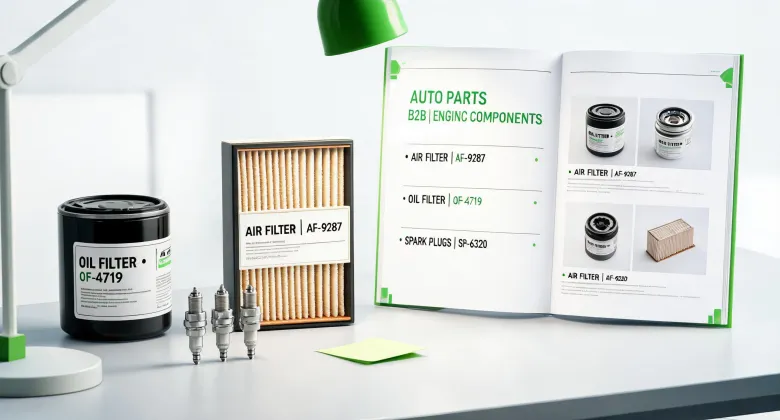
The Call That Changes How You Think About Diagnostics
It was 4:17 AM on a Tuesday. I'm not guessing—I checked my call log later that morning. A client, a medium-sized fleet maintenance depot in Ohio, had a truck down. The driver was stranded at a loading dock in Pennsylvania, and the delivery window closed in 36 hours. The initial verdict from their tech: bad fuel pump. They needed a new one, and they needed it yesterday.
My first instinct was to process the order and move on. But something made me pause. In my role managing rush orders for an automotive parts distributor, I've handled maybe 200 fuel pump-related emergencies over the years—maybe 180, I'd have to check the log. And I've learned that when a diagnosis comes in during a panic, it's often not the whole story.
Everything I read about fuel system diagnostics says the symptoms are straightforward: engine cranks but won't start, loss of power under load, whining noise from the tank. In practice, I found that those symptoms point to the pump only about 60% of the time. The rest? It's the stuff around the pump that's actually failing.
Beyond the Pump: What You're Not Checking
Here's where the deep dive starts. When a tech says "bad fuel pump," they've usually done the basics—checked for fuel at the rail, listened for the prime cycle. But the real question isn't "Is the pump dead?" It's "Why is the pump dead?"
That question changes everything.
The Hidden Culprit: Contamination from a Failing Filter
I've lost count of the times we've traced a pump failure back to a clogged or degraded oil filter. Wait—let me clarify. It's not the fuel filter I'm talking about, though that's also a suspect. I mean the engine's oil filtration system. When a filter like the mahle ox 175d oil filter starts to break down internally, it can send particulates through the oil system, affecting fuel injector performance and, indirectly, the fuel pump's load. A failing pump isn't always a part failure—it's often a symptom of a system under stress.
I should add that this is more common in high-mileage commercial vehicles. I've only worked with fleets running 200,000+ miles. If you're dealing with newer trucks, your experience might differ. But for the older fleets I serve, that oil filter-to-pump connection keeps showing up.
The Spark Plug Tube Seal: A Small Part, A Big Problem
Then there's the case of the mahle gs33778 spark plug tube seal set. I know—it sounds completely unrelated to a fuel pump. But stay with me.
Last year, I had a client whose engine was misfiring and throwing a lean code. Their tech had already ordered a new fuel pump. I asked them to check the spark plug tube seals first. Why? Because a bad seal lets oil seep into the spark plug well. That oil fouls the plug, the plug misfires, the oxygen sensor reads excess oxygen, and the ECU—thinking it's a fuel delivery issue—adjusts the mixture to compensate. The driver feels a loss of power and a rough idle, and their first thought is "bad fuel pump."
We shipped them the seal set. The pump order was canceled. The client saved about $450 and four hours of labor. (Should mention: they'd already paid a diagnostic fee, so it wasn't a perfect win, but it was a lot better than the alternative.)
The Real Cost of a Misdiagnosis
Let me put it in numbers. The average fuel pump replacement for a heavy-duty truck runs around $800–$1,200 for the part, plus 3–5 hours of labor at $150/hour. If the pump wasn't the root cause, you've now spent $1,400–$2,000 and the problem is still there.
Our company lost a $40,000 maintenance contract in 2023 because we sourced a rush fuel pump that failed within 30 days. The root cause? The truck's fuel tank had sediment that contaminated the new pump. We didn't ask the right questions upfront. We paid $600 in overnight shipping and a $150 restocking fee, and we still lost the account. That's when we implemented our 'diagnosis-first' policy for any emergency order over $200.
According to data from the Automotive Aftermarket Suppliers Association (AASA), roughly 15% of fuel pump replacements in commercial vehicles are due to secondary system contamination. That's not a niche problem—that's one in seven jobs where the pump itself wasn't the original issue.
Other Components That Fool Diagnostics
The fuel pump isn't the only part that gets blamed unfairly. I've seen similar patterns with other components.
Headlights and Electrical Load
I once wasted an afternoon diagnosing a fuel pump circuit that kept blowing fuses. After swapping the pump and the relay, I noticed a simple light bulb for headlight had failed in a way that created a short in the circuit. The headlight and the pump shared a chassis ground. A bad bulb drew excessive current, the circuit protection tripped, and the pump stopped getting power. $8 bulb, $300 in replaced parts—but we learned the lesson the hard way.
The Water Pump Parallel
I don't work on sta rite water pumps directly—that's a different industry—but a colleague in irrigation equipment once told me their failure patterns are eerily similar. A pump that won't prime is assumed dead, but often it's a cracked seal or a blocked intake. The principle is universal: the pump is the last thing to fail in a system.
A Better Approach to Diagnostics
If you're reading this because you're facing a potential fuel pump issue—or any mysterious drivability problem—here's what I recommend, based on my experience with hundreds of rush orders.
This approach works for about 80% of cases. If you're dealing with a brand-new vehicle under warranty, or if the issue is intermittent and you have a diagnostic scan tool, the following may not apply. But for the common scenario—older vehicle, sudden failure, limited time—this is my go-to checklist.
- Check the simple stuff first. Fuel filter. Spark plug seals. Ground connections. These take 15 minutes each.
- Ask about the history. Did the problem start after a service? After a long idle period? After refueling at a new station?
- Test the pump, don't just assume. Measure fuel pressure at idle, under load, and after shut-off. A pump that primes but can't maintain pressure is different from a pump that doesn't prime at all.
- Confirm the part. If you're ordering a replacement, verify the OEM specification. The mahle GS33778 is designed for specific Volkswagen and Audi engines; using a generic seal might work temporarily, but it won't hold up. The mahle OX 175D oil filter has a bypass valve calibrated for certain oil viscosity and flow rates. Using the wrong one can restrict oil flow during cold starts, leading to bearing wear and, yes, increased load on the fuel injection system.
I recommend using OEM-equivalent parts from suppliers who clearly state their cross-references. If your supplier says "it fits everything," that's a red flag. A good supplier will tell you, "This part works for engines A, B, and C. If you have engine D, here's what you need instead." That honesty costs them a sale sometimes, but it builds trust for the next order.
When to Ignore This Advice
I should be upfront: my experience is based on about 200 orders, primarily with older diesel commercial vehicles and some heavy-duty gasoline fleets. If you're working with gasoline passenger cars from 2020 or newer, the diagnostic landscape is different—modern ECUs have advanced fuel pressure sensors and can often isolate the issue better. In that case, trust the scan tool over my anecdotal patterns.
Also, if you're in a situation where time is absolutely critical and you need to make a decision in under an hour, sometimes the right call is to replace the pump and the filter together, then diagnose the secondary issues later. That's not ideal, but it's realistic. I've done it myself.
Final Thought
The best diagnostic tool isn't a multimeter or a pressure gauge—it's a willingness to question the first conclusion. The fuel pump is a heavy, expensive, time-consuming part to replace. Before you commit, ask yourself: Is the pump the problem, or is it just the messenger?
And if you're scrambling for a rush order at 4 AM? Call a supplier who asks the hard questions first. We're out here, and we've seen this before.