
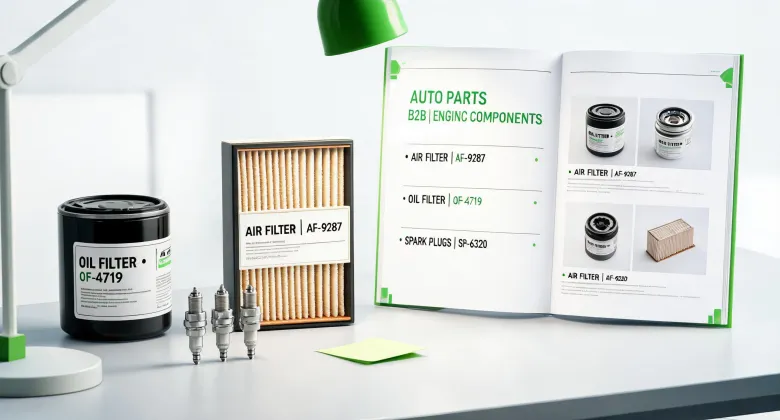
-
Is the Mahle 54661 engine cylinder head gasket worth the premium vs. a budget head gasket?
-
What should I check when ordering a Mahle Honda oil filter?
-
How do I price a Nissan Frontier rear differential without getting stuck with a pile of hidden costs?
-
Is a top mount intercooler WRX fitment worth it, or should I save for a front mount?
-
Brake light vs tail light: Is there really a difference in the bulbs?
-
How can I verify that I'm buying genuine Mahle parts and not counterfeit?
-
When should I walk away from a cheap parts quote?
I'm a procurement manager at a 12-person independent repair shop in Denver. I've managed our parts purchasing budget—roughly $410,000 annually—for seven years, and I've negotiated with 40+ vendors in that time. Every order goes through our cost tracking system, so when I say hidden fees add up, it's because I've watched them eat budgets.
This FAQ covers the questions I hear most: Mahle 54661 engine cylinder head gasket, Mahle Honda oil filters, Nissan Frontier rear differential repairs, WRX top mount intercoolers, and brake light vs tail light replacements. No sales pitch, just what I'd look at before signing the PO.
Is the Mahle 54661 engine cylinder head gasket worth the premium vs. a budget head gasket?
Part number first, price second. The Mahle 54661 engine cylinder head gasket is one of those cross-reference numbers where you really do need to verify the engine code and OE head gasket number, not just the vehicle's year. On one job in 2023, a short block swap changed the gasket spec in the middle of a model year, and the catalog didn't flag it until we called Mahle's tech line.
As for the premium: a cheaper gasket can look like a smart line item until you add the labor risk. I've seen a $40 savings turn into a $1,200 redo when the head surface wasn't right and the coolant pushed into a cylinder. The numbers said budget was fine. My gut said use Mahle. I went with Mahle, and the engine is still dry three years later.
Even after that good call, I second-guessed the choice until the pressure test passed. That anxiety is normal. The point is to make the risky decision only when you have the full picture: engine code, head surface finish, torque specs, and a gasket that matches the build.
What should I check when ordering a Mahle Honda oil filter?
Cross-reference the Honda OEM part number, not just the engine size. A Mahle Honda oil filter can be listed under a vehicle, but Honda uses different bypass valve pressures across engines and years. The filter box should show the equivalent Honda number. If the listing doesn't show it, ask the distributor for the fitment sheet before ordering.
For our shop, we standardized on Mahle for routine Honda oil changes because we buy in bulk and the consistency keeps comebacks low. But 'fits Honda' isn't enough. I always check three things:
- Thread size and filter inlet thread (micrometer, not eyeball)
- Bypass valve setting
- Whether it's a short filter vs. tall filter for clearance
One more thing: a filter that's $2 cheaper is fine if all three match. We bought a pallet of a no-name filter once because it 'looked the same.' Three cars came back with oil pressure lights on startup. That was a $900 lesson in gasket sealing and bypass specs.
How do I price a Nissan Frontier rear differential without getting stuck with a pile of hidden costs?
The Nissan Frontier rear differential is not one part number. You need axle ratio, open vs. locker, ABS tone ring, axle tube length, and whether the truck has drum or disc brakes. I always pull the tag code or the OEM part number from the service manual before calling vendors. If you buy by '2005 Frontier V6 4x4,' you're asking for a return headache.
When we compared a used unit and a reman unit in Q2 2024, the used unit was $850. The reman was $1,300. Used looked cheaper until we added seals, axle bearings, brake hardware, and fluid: $480. Add the core return freight and the used was actually $1,480 vs. $1,300 for reman. We bought reman.
This approach works for us, but we're an independent shop with no warranty department pressure. If you're a dealership, the calculus might be different because OEM policy and warranty coverage matter more than cash out the door.
Is a top mount intercooler WRX fitment worth it, or should I save for a front mount?
It depends on how much power and how much time in traffic. A top mount intercooler WRX build often starts with a bigger core because it keeps the stock routing and uses the hood scoop. But here's the thing: a bigger core isn't automatically better. A huge TMIC without the correct splitter and hood scoop can heat soak at a stoplight, especially on a daily driver.
We test this by logging intake air temperatures. In our own 2023 WRX project, the data said a front mount would flow more. My gut said keep the top mount because the car wasn't a track build. We installed a quality TMIC, kept the stock routing, and IATs stayed within 15 degrees F of ambient at speed. Good enough for a 300 hp street plan.
If you're looking at a used WRX TMIC, factor in the missing Y-pipes, cracked silicone hoses, and stripped studs. A $250 used IC can easily need $200 in parts before it fits. That's the hidden cost question again.
Brake light vs tail light: Is there really a difference in the bulbs?
Yes. The brake light vs tail light difference is brightness, and sometimes circuit design. A dual-filament bulb such as a 1157 or 3157 has a dimmer filament for the tail lamp and a brighter filament for the stop lamp. A single-filament bulb such as a 1156 only has one brightness level. Put the wrong one in a dual-filament socket and the brake light won't get the separate signal.
According to FMVSS 108 (NHTSA, nhtsa.gov), stop lamps and tail lamps both emit red light, but the stop lamp must be significantly brighter. That's why a simple 'they're both red' isn't enough. If you convert to LEDs, check the socket type and whether the vehicle needs a resistor or a different flasher to avoid hyperflash.
From a purchasing perspective, my only rule is: buy by bulb number from the owner's manual, not by what the seller says fits. A $3 bulb that doesn't work costs $45 in labor. Not a bargain.
How can I verify that I'm buying genuine Mahle parts and not counterfeit?
Counterfeit filters and gaskets are a real problem, especially for popular part numbers like Mahle's Honda oil filter and the 54661 cylinder head gasket. In 2024, we caught a batch of oil filters with the right Mahle box but mismatched internals. The core was lighter, and the bypass valve didn't meet spec.
What I do now:
- Order from authorized distributors, not random marketplace listings
- Check the label and part number against Mahle's catalog
- Look for lot codes and laser marking on the part
- Ask for lot traceability if the price is below the normal range
If a vendor can't tell you the lot number, do not buy. That sounds harsh, but a gasket failure after an engine build is not a $60 mistake. It's a five-figure mistake. I'd rather pay list price to a distributor who can prove where the part came from.
When should I walk away from a cheap parts quote?
Walk away when the quote doesn't show everything. I've learned to ask 'What's NOT included?' before asking 'What's the price?' A quote for a rear differential that excludes freight, core charge, seals, fill plugs, and gear oil is not a quote. It's the start of a negotiation you'll lose.
After getting burned by hidden fees twice, I built a TCO calculator in our procurement spreadsheet. In Q2 2024, I compared three vendors for a Nissan Frontier rear differential. The lowest line price was not the lowest total cost after I added mandatory fees. The vendor with the highest upfront price had everything bundled. That's a 17% difference in TCO on that job.
To be fair, cash flow is real. I get why a shop owner chooses the cheaper quote on a slow week. But make that choice with the full number in front of you, not with a guess. Our policy now: three quotes, each with a TCO line. We cut our budget overruns by 16% in six months. Those numbers are from our 2024 quotes, so verify current pricing before you plan a budget.
That's the whole answer. No black-belt procurement trick. Just ask questions, get the total, and buy certainty when the stakes are high.